.png)
The Hidden Value of Independent Factory Audits Before Signing a Contract
Independent factory audits help buyers validate supplier capabilities, verify quality systems, and reduce procurement risks before major investments are made.
By M Silva, Managing Partner | June 13, 2026 | Estimated reading time: 6 minutes

Why Pre-Contract Confidence Matters
In the competitive landscape of global procurement, discovering a new supplier that promises high quality, rapid turnaround times, and aggressive pricing can feel like a major victory. The temptation to immediately sign a long-term supply agreement or commit to expensive custom tooling is often strong, driven by pressure to reduce costs and accelerate time-to-market. However, committing to a supplier based solely on a polished sales presentation and a handful of perfect "golden samples" is a high-stakes gamble.
This is where the independent factory audit becomes an indispensable tool. A factory audit is a systematic, on-site evaluation of a manufacturing facility conducted by unbiased professionals. It serves as a critical bridge between a supplier’s promises and their actual operational reality. By investing in an independent assessment before a contract is finalized, procurement leaders can confidently validate production capabilities, uncover hidden vulnerabilities, and ensure that the supplier possesses the maturity required to support a strategic, long-term partnership.
Supplier Capability Must Be Verified, Not Assumed
A common pitfall in global sourcing is the assumption that a supplier's stated capacity is synonymous with their actual, sustainable output. Sales representatives frequently present theoretical maximums—assuming 100% uptime, zero defects, and infinite labor availability. In reality, true capability is constrained by equipment age, maintenance schedules, workforce skill levels, and supply chain bottlenecks.
An independent audit provides a clear-eyed assessment of these factors. Auditors walk the production floor to verify how many production lines are fully operational versus idled. They assess the condition and technological relevance of the machinery. Furthermore, they evaluate capacity planning systems to determine if the supplier can genuinely absorb your projected order volumes without resorting to unauthorized, unvetted subcontractors—a practice that introduces severe quality and compliance risks.
Quality Systems Reveal Whether Performance Is Repeatable
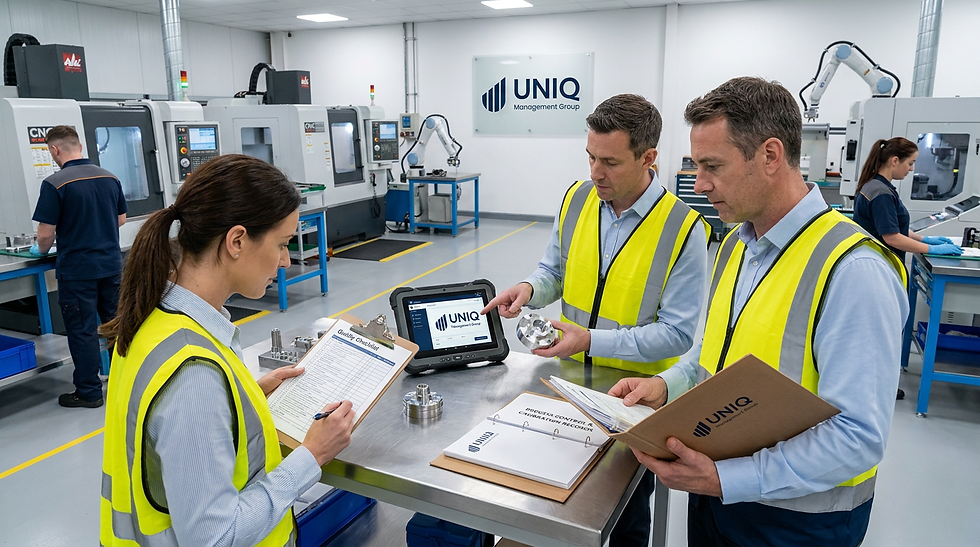
Manufacturing a single perfect prototype is relatively easy; producing ten thousand flawless units month after month requires a rigorous, deeply embedded Quality Management System (QMS). Many suppliers boast ISO 9001 certifications on their websites, but a certificate on the wall does not guarantee that quality procedures are actively practiced on the shop floor.
During a factory audit, independent experts dig into the mechanics of the supplier's quality control. They examine incoming material inspections, in-process monitoring, and final product testing. They look for traceability—if a defect is found, can the factory trace it back to a specific batch of raw materials or a specific machine operator? Furthermore, auditors assess the supplier’s corrective and preventive action (CAPA) systems. A mature supplier doesn't just catch defects; they systematically analyze the root cause to ensure the error is never repeated.

Operational Reality Often Differs From Sales Presentations
The most profound value of an independent audit lies in its ability to uncover the undocumented realities of a factory's daily operations. A beautifully designed corporate brochure will never mention that the facility suffers from high employee turnover, resulting in a constantly untrained workforce. It will not highlight that critical maintenance is routinely deferred to save costs, creating a high risk of sudden, prolonged equipment breakdowns.
Auditors are trained to spot the subtle indicators of operational distress. An over-reliance on a few key individuals for complex setups, poorly organized spare parts storage, or a chaotic, unsafe plant floor are all red flags. These hidden risks represent direct threats to your supply chain stability. By identifying these gaps before a contract is signed, buyers gain the leverage to either mandate specific operational improvements as a condition of the deal, or to walk away and seek a more reliable partner.
"A polished corporate brochure will never reveal deferred maintenance or an untrained workforce. An independent factory audit is the only reliable way to separate sales fiction from operational reality."

What an Independent Factory Audit Should Examine
To be fully effective, a pre-contract factory audit must be comprehensive and systematically executed. While specific criteria may vary by industry, a robust audit framework should explicitly evaluate the following core areas:
Production Capability & Capacity: Verification of actual throughput, assessment of machinery age and condition, and analysis of capacity planning to ensure the supplier can meet your volume requirements without unauthorized subcontracting.
Quality Management Systems (QMS): Deep-dive review of incoming, in-process, and final quality controls, calibration records of testing equipment, and the efficacy of corrective action protocols.
Equipment & Maintenance Maturity: Auditing the ratio of preventive versus reactive maintenance, reviewing CMMS data, and ensuring adequate inventory of critical spare parts.
Workforce & Management Discipline: Evaluation of operator training records, standard operating procedure (SOP) adherence, supervision structures, and employee retention rates.
Environmental & Social Compliance: Checking for basic adherence to labor laws, workplace safety standards (EHS), proper hazardous material handling, and environmental permitting.

Conclusion
In an era where supply chain disruptions can have devastating financial and reputational consequences, relying on trust alone is not a viable procurement strategy. Independent factory audits provide the objective, ground-level intelligence required to make sound, strategic sourcing decisions. They transform the procurement process from a hopeful gamble into a data-driven science.
By investing in an independent evaluation before signing a contract or committing to major tooling, organizations protect their capital, secure their supply lines, and establish a baseline of operational expectations with their new partners. Ultimately, a factory audit is not merely an expense or a procedural hurdle; it is a foundational investment in long-term supply chain resilience and enterprise value.
Published by UNIQ Management Group Insights. Dedicated to advancing operational excellence, enterprise risk management, and strategic transaction advisory.


Comments